
The Whole School Approach to Anti-Racism: A new way forward for Scotland’s schools
Groundbreaking new guidance on anti-racism in education has been published by Scottish Government.
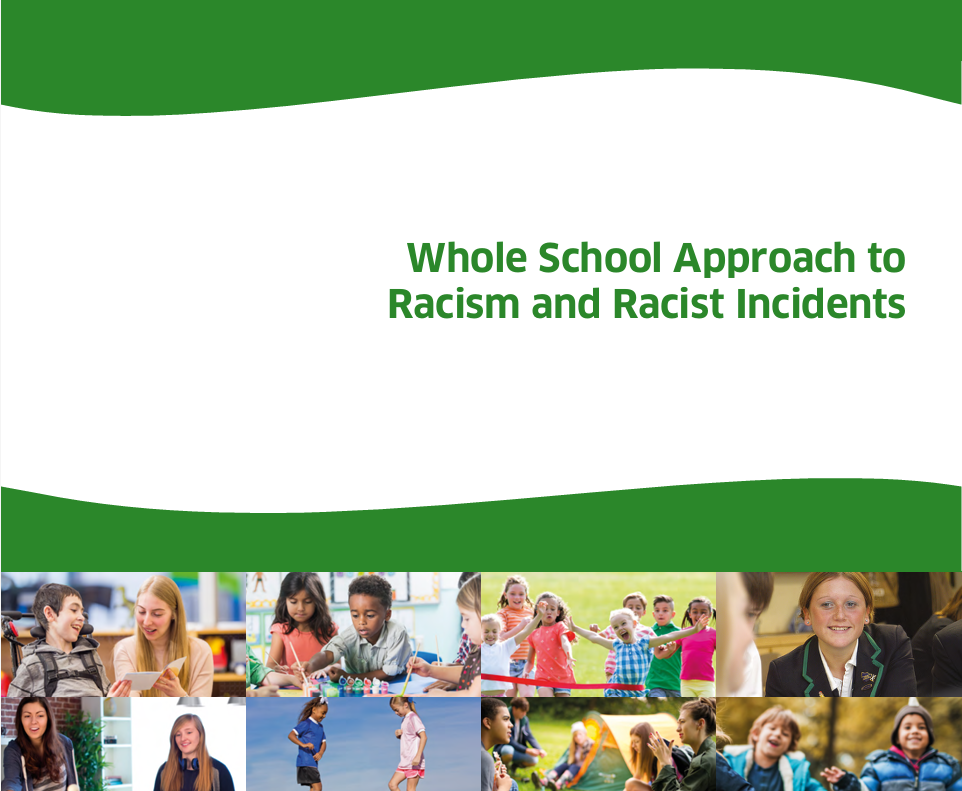
The Whole School Approach to Anti-Racism and Racist Incidents is the latest release from the Anti-Racism in Education Programme (AREP), a collaborative initiative bringing together Scottish Government representatives, education practitioners and anti-racism specialists.
From CRER’s perspective, this model represents a sea change in Scottish Government’s approach to involvement. It demonstrates that synergy between policy makers and key stakeholders can create tangible change.
The breadth of knowledge within AREP has made this comprehensive new guidance possible. Those involved bring experience of the devastating impact racism can have on learners and the wider school community, and of the practicalities of how schools respond to this.
AREP is governed by a Programme Board, with work taken forward through four dedicated Subgroups:
Curriculum Reform
Education Leadership and Professional Learning
Diversity in the Teaching Profession and Education Workforce
Racism and Racist Incidents
CRER is represented on the Programme Board and three Subgroups (the exception being the Diversity in the Teaching Profession and Education Workforce).
Development of the new guidance has been led by Scottish Government’s Learning Directorate in co-production with members of the AREP Racism and Racist Incidents Subgroup.
The work has drawn on earlier guidance developed by CRER and respectme at the request of Scottish Government, Addressing Inclusion: Effectively Challenging Racism in Schools. Both organisations have been involved in developing the Whole School Approach, along with colleagues from across the public sector, third sector and academia. A full list of Subgroup member organisations is available here.
CRER’s advice and advocacy service for parents and carers of young people facing racism in school, AdRESS, is also part of the Subgroup and supported the development process.
The Whole School Approach moves beyond reactive approaches to tackling incidents once they occur, to include preventative approaches which challenge systemic and structural forms of racism. Schools using the guidance will be better equipped to take universal actions to build an anti-racist environment within their schools, and to make targeted responses where racism needs to be addressed.
More AREP resources are available online, including the Anti-Racism in Education Commitment, which can be signed up to by anyone working in education in Scotland, and a set of principles for anti-racist curriculum development, the Breaking the Mould principles.
For CRER, involvement in the Anti-Racism in Education Programme is the culmination of over 20 years of research and campaigning to challenge racism in Scotland’s schools.
CRER’s work in this area includes:
Leading a review of race equality curriculum resources, as part of the Deputy First Minister’s Race Equality Curriculum Resources Review Group
Producing an Introduction to Anti-Racist Curriculum Development
Working with Glasgow City Council on capacity building for teachers and officers in Education Services
Developing an online resource for teachers on Human Rights and Anti-Racism in Education
A long-standing programme of research on racist incidents and racially motivated bullying in schools, with a focus on policies and reporting
It’s hoped that the new Whole School Approach to Anti-Racism will increase confidence in reporting and recording racist incidents, and CRER will be monitoring this through future research. Crucially, learners are at the heart of the Whole School Approach. All children and young people should feel safe and supported to talk about their experiences of racism, and the Whole School Approach aims to make this a reality.
In the meantime, we still have work to do. CRER’s Manifesto for an Anti-Racist Scotland includes a priority on improving approaches to reporting and recording incidents. We're calling for a mandatory requirement on recording racist incidents in Scotland's schools, with data collected and published centrally, to address the shortcomings of the current voluntary, localised system.
While this and other ongoing education priorities are CRER’s own perspectives and not necessarily those of AREP and our fellow members, we’re looking forward to continuing the discussion as we work together to transform approaches to addressing racism in Scotland’s schools.